
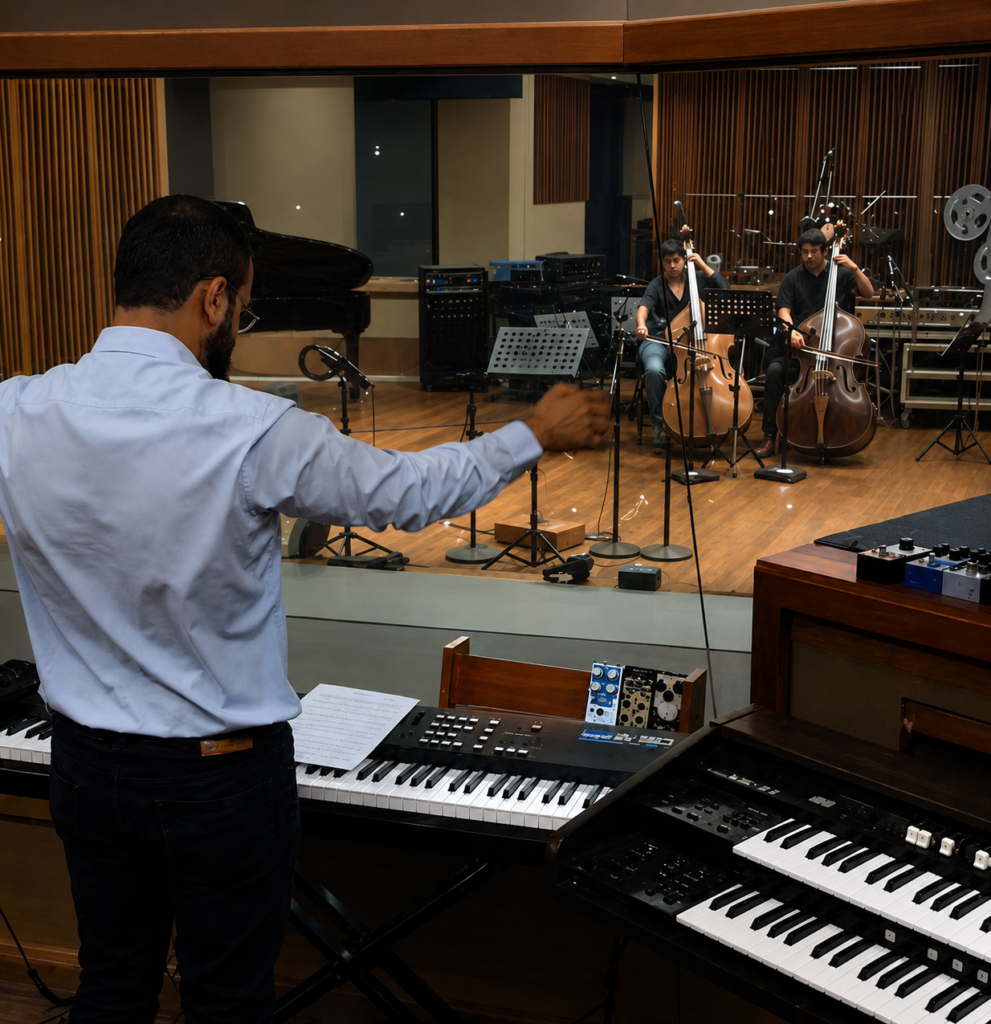
Why Major Artists Still Record Live Strings in 2026
For years, the music industry has been told the same story: sample libraries are becoming more sophisticated, virtual instruments are more realistic than ever, and artificial intelligence continues to transform music production. Many predicted that live musicians would eventually become unnecessary.
Yet in 2026, some of the world’s most respected artists, producers, composers, and music directors continue to invest in live string recording sessions.
Why?
Ironically, the answer may be the very success of sample libraries themselves.
After decades of hearing similar virtual sounds across countless productions, listeners have become increasingly sensitive to repetition. The technology has improved dramatically, but so has the collective ear of the audience. What once sounded innovative now often sounds familiar. What once felt realistic now feels expected.
This is where live strings continue to stand apart.
Not because they are flawless, but because they are human.
A great string arrangement is not simply a collection of notes placed on a timeline. It is written for musicians who breathe between phrases, shape every note differently, react to one another, and bring subtle variations that no software can fully predict. Warmth, phrasing, vibrato, dynamics, and musical intention are constantly evolving throughout a performance, creating something that feels alive rather than programmed.
Whether consciously or subconsciously, audiences respond to that authenticity.
There is also a factor that producers rarely discuss openly: prestige. Recording with a string quartet, chamber ensemble, or orchestra sends a message. It communicates artistic ambition. In much the same way that a luxury automobile and a rideshare service can both arrive at the same destination, only one creates a memorable arrival. The same principle applies to music production. Live strings are not merely a technical decision; they are a statement about the level of care invested in a project.
Sample Libraries Have Never Been Better
Before discussing the advantages of live musicians, it is important to acknowledge how extraordinary modern sample libraries have become.
Today’s producers and composers have access to tools that previous generations could only imagine. High-quality virtual instruments make it possible to create convincing mockups, experiment with orchestration, and explore ideas quickly and efficiently. They have democratized access to orchestral sounds and have become an essential part of modern production workflows.
I use them myself.
Sample libraries are invaluable when developing demos, presenting concepts to clients, testing orchestrations, or creating hybrid productions that combine virtual and acoustic elements. In many situations, they are absolutely the right tool for the job.
The question is not whether sample libraries are useful. They clearly are.
The more interesting question is where their limitations begin.
And in most cases, the answer comes down to one thing: expression.
What Live String Players Bring to a Recording
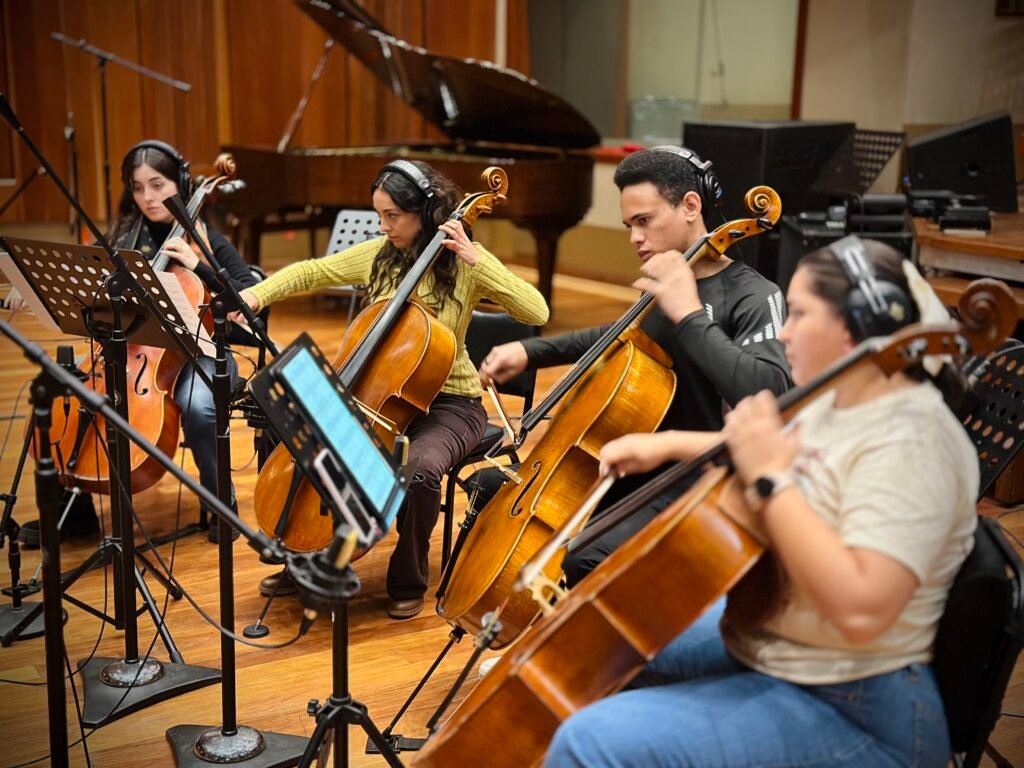
One of the easiest ways to identify virtual strings is not necessarily the quality of the samples themselves. Modern libraries can sound remarkable. Instead, the difference often reveals itself in the connection between notes.
Real string players continuously shape the space between notes. They adjust bow pressure, modify vibrato, alter timing, react to the phrase, and respond to the musicians around them. These decisions happen naturally and constantly, creating performances that evolve in ways that are difficult to reproduce through programming alone.
A violinist does not perform a phrase as a sequence of isolated notes. A violinist performs a musical idea.
The same principle applies throughout the string section. Violists, cellists, and bassists are constantly making small interpretive decisions that influence the character of a performance. When multiple musicians perform together, these subtle variations interact to create a living texture that changes from moment to moment.
Dynamics provide another important distinction. In a real performance, a crescendo is more than an increase in volume. It creates tension. A diminuendo releases it. Even a sustained note is rarely static. It evolves, breathes, and shifts in color over time.
This becomes especially noticeable in exposed solo passages, where every detail is magnified. The more intimate the writing, the more difficult it becomes to replicate convincingly with virtual instruments alone.
Why Some Recordings Remain Timeless
Many iconic recordings owe part of their identity to live string performances.
Oasis’ Whatever remains one of the most compelling examples in popular music. The string quartet does far more than support the song; it has become inseparable from its identity. Remove those musicians, and the emotional impact changes dramatically.
The same can be said for Eleanor Rigby. The arrangement is not decorative. It is an essential storytelling element that shapes the listener’s experience from beginning to end.
More recently, artists such as Adele, Coldplay, Billie Eilish, and Taylor Swift have continued to incorporate live strings into productions where emotional depth plays a central role. While listeners may never consciously analyze the vibrato of a violin section or the articulation of a cello line, they often respond to the emotional result.
That response is what separates a good production from a memorable one.
When Sample Libraries Make Perfect Sense
This article is not an argument against technology.
In fact, sample libraries remain among the most valuable tools available to modern producers. There are many situations where virtual strings are not only practical but ideal.
Mockups, demos, pre-production, experimentation, and budget-conscious projects all benefit enormously from virtual instruments. In many cases, sample libraries allow composers and producers to explore ideas that would otherwise remain inaccessible.
One of the most effective approaches is the combination of real musicians and virtual layers. Hybrid productions can deliver remarkable depth, scale, and flexibility when executed thoughtfully. Virtual instruments can provide support, texture, and expansion, while live players contribute realism, interpretation, and emotional nuance.
Technology and musicianship are not opposing forces.
The strongest productions often rely on both.
When Producers Should Hire Live String Musicians
There comes a point in certain productions where realism is no longer optional. It becomes part of the artistic objective.
This often occurs when an artist is preparing a defining release, when a producer is searching for a signature sound, or when a film score requires emotional credibility. It can also happen when the arrangement itself becomes an important part of the song’s identity rather than simply supporting the harmony.
In these situations, live string musicians become more than performers. They become collaborators.
Their interpretation contributes directly to the final result. Their phrasing influences the emotional impact of the arrangement. Their musical instincts help transform written notes into a compelling performance.
At the highest levels of music production, real performances continue to serve as the benchmark against which everything else is measured. Technology continues to evolve, but excellence remains deeply connected to human interpretation.
Common Mistakes Producers Make With Virtual Strings
One of the most common mistakes is treating strings as pads rather than musical voices.
Instead of writing lines with direction and purpose, many productions rely on static harmonic textures that simply occupy space. While this approach can create size, it rarely creates movement or emotional engagement.
Another frequent mistake is excessive density. More instruments do not automatically create greater impact. In many situations, clarity, restraint, and thoughtful orchestration produce stronger results than sheer volume.
There is also a tendency to write for enormous orchestras in projects that have little or no orchestral identity. A massive symphonic arrangement behind an artist who has never incorporated orchestral elements can feel disconnected from the rest of the production.
Credibility matters.
The best string arrangements support the artistic vision of the project. They do not compete with it.
Why Producers Around the World Still Hire String Sections
“Listeners rarely remember technology.
They remember emotion.”
-Jared Ahedo
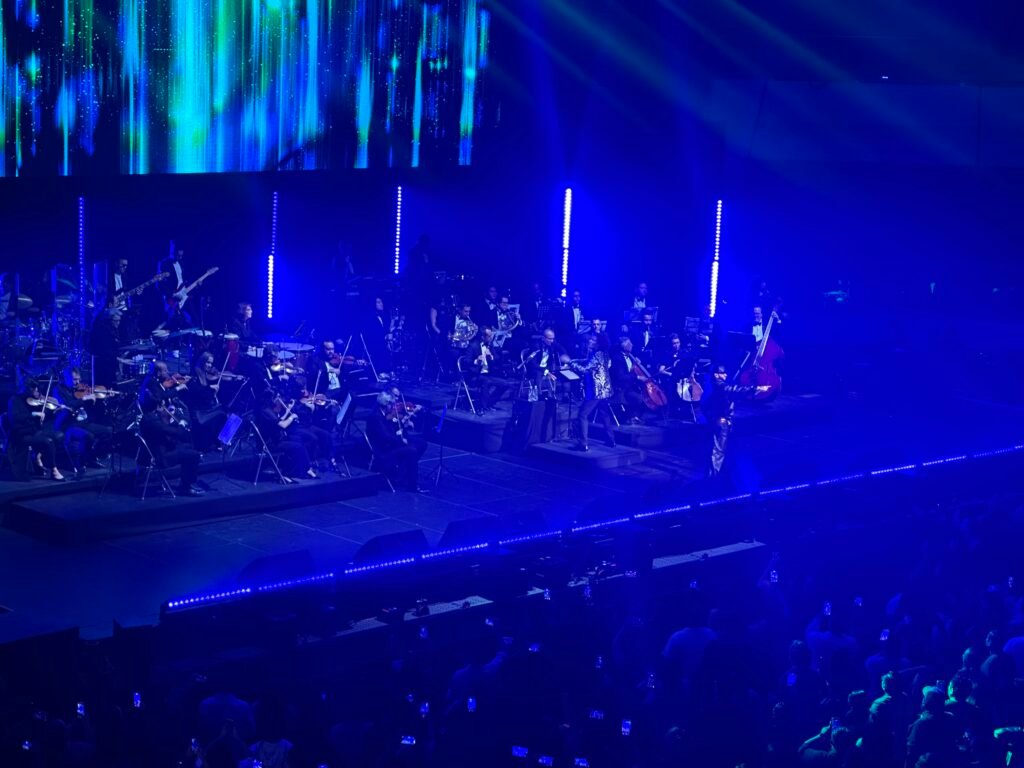
Whether a session takes place in Los Angeles, London, Nashville, Mexico City, or remotely across continents, producers continue to hire live string sections for one simple reason: interpretation.
No software can fully recreate what happens when talented musicians bring a written arrangement to life. The best producers understand that listeners rarely remember the technology behind a recording. They remember how the music made them feel.
They remember moments.
They remember performances.
Live musicians create those moments.
That is why string sections remain a vital part of so many successful productions across genres and markets.
Live Strings vs Samples: Where Music Production Is Heading
Every production trend follows a cycle.
At one point, sample libraries felt revolutionary. Over time they became common, and today they are present in nearly every corner of the industry. Ironically, their widespread adoption may be one of the reasons why live recordings are becoming more valuable once again.
Audiences increasingly seek authenticity, personality, and human connection. Artificial intelligence will continue to improve. Virtual instruments will become more sophisticated. Production tools will become faster and more accessible.
These developments are exciting and beneficial for the industry.
However, tools do not replace artistry. They support it.
Music is culture. Music is communication. Music is human expression.
Technology can imitate many aspects of performance, accelerate workflows, and inspire creativity. What it cannot fully replace is the vision of a great producer, the imagination of a skilled composer, or the interpretation of exceptional musicians.
At the highest levels of the industry, reality remains the benchmark—not because technology has failed, but because human performance still offers something audiences instinctively recognize and value.
Final Thoughts
The question is no longer whether sample libraries can sound good.
They can.
The more important question is whether they can consistently deliver the same emotional depth, flexibility, nuance, and artistic impact as real musicians.
In some situations, the answer is yes.
In many others, the answer is not yet.
That is why major artists continue to record live strings. Not because technology is insufficient, but because great music deserves every advantage available.
And sometimes, the most powerful advantage in the room is still a group of talented musicians performing together.
Related Services
- String Arrangements
- Orchestra Contracting
- Live String Recording
- Remote String Recording
- String Quartet Performances
- Orchestral Production
About the Author
Jared Ahedo is a Grammy®-Credited String Arranger, Violinist, Orchestra Contractor, and Music Producer based in Mexico.
He collaborates with artists, producers, composers, and organizations worldwide, providing professional string arrangements, live recording sessions, orchestral contracting, and concert production services.